

Tennis elbow, also known as lateral epicondylitis, is a common condition that affects the tendons and muscles of the forearm, leading to pain and stiffness on the outside of the elbow. Physiotherapy can play a crucial role in the management and treatment of tennis elbow. Here’s how:
Physiotherapy Treatment for Tennis Elbow
Initial Phase (0-2 weeks)
- Pain management: Use of heat, cold, or electrical modalities to reduce pain and inflammation.
- Rest and modification of activities: Avoiding activities that aggravate the condition and modifying daily activities to reduce strain on the affected tendon.
- Stretching and mobilization: Gentle stretching and mobilization exercises to maintain range of motion and reduce stiffness.
Intermediate Phase (2-6 weeks)
- Strengthening exercises: Progressive strengthening exercises for the forearm muscles, wrist extensors, and shoulder stabilizers.
- Eccentric exercises: Eccentric exercises, such as wrist extensions and rotations, to strengthen the affected tendon.
- Functional activities: Gradual introduction of functional activities, such as gripping, twisting, and lifting, to simulate daily tasks.
Advanced Phase (6-12 weeks)
- Agility and proprioception exercises: Exercises to improve agility, proprioception, and reaction time.
- Return to sport or activity: Gradual return to sport or activity, with emphasis on proper technique and biomechanics.
- Maintenance and prevention: Education on maintenance exercises, stretching, and prevention strategies to avoid future episodes.
Advanced Physiotherapy for tennis elbow at Triage Physiotherapy Centre
- Intramuscular Dry Needling Therapy
- Extra corporeal Shockwave Therapy
- LIPUS (Low Intensity Pulsed Ultrasound Therapy
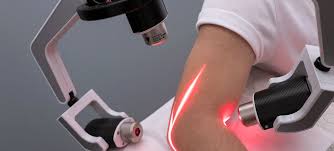
- Scanning and Probe LASER Therapy
- Manual therapy/ MFR
- IASTM therapy
- Cryotherapy
Benefits of Physiotherapy for Tennis Elbow
- Reduces pain and inflammation: Physiotherapy helps to reduce pain and inflammation, promoting a faster recovery.
- Improves range of motion and strength: Physiotherapy exercises help to maintain or improve range of motion and strength, reducing the risk of future episodes.
- Enhances function and mobility: Physiotherapy enables individuals to return to their normal activities and sports, with improved function and mobility.
- Prevents future episodes: Physiotherapy education and exercises help to prevent future episodes of tennis elbow.
When to Seek Physiotherapy for Tennis Elbow
- Persistent pain: If you experience persistent pain or stiffness on the outside of your elbow.
- Limited mobility: If you have limited mobility or stiffness in your elbow or forearm.
- Weakness or fatigue: If you experience weakness or fatigue in your forearm or wrist.
- Difficulty with daily activities: If you have difficulty with daily activities, such as gripping, twisting, or lifting.
Consult with a physiotherapist if you’re experiencing any of these symptoms or concerns. They will assess your condition and create a personalized treatment plan to help you recover from tennis elbow.